A rectangular prism is a 3D shape with six flat faces, all rectangles. Think of a shoebox, cereal box, or brick – those are perfect examples! It has length, width, and height. Volume tells us how much space is inside. Knowing the volume of a rectangular prism helps pack boxes, fill pools, or bake cakes. It’s super useful in real life. Kids love it because it’s like measuring treasure chests. Adults use it for building or shopping. This guide makes it fun and easy. We’ll use simple words, colorful examples, and step-by-step instructions. Get ready to become a volume expert! (108 words)
Table of Contents
The Magic Formula for Volume of a Rectangular Prism
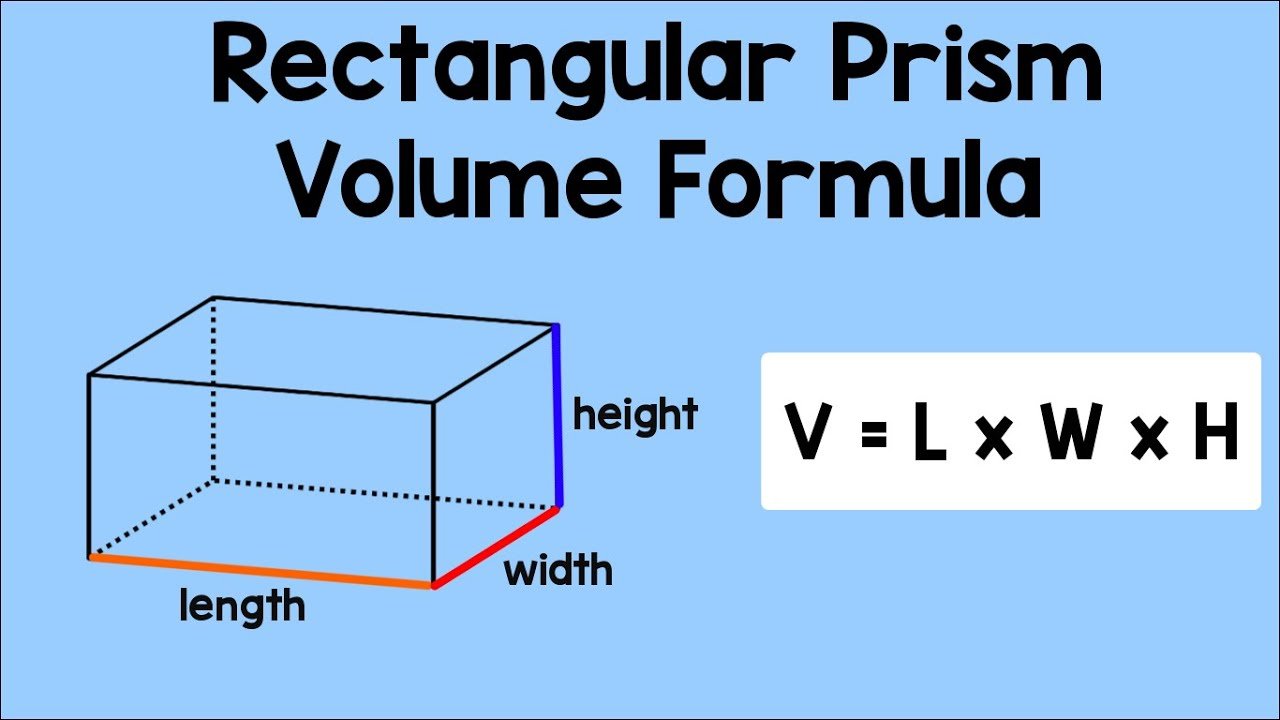
The formula is simple: Volume = length × width × height. We write it as V = l × w × h. Length is the longest side, width is side-to-side, height is top-to-bottom. Always measure in the same units, like inches or centimeters. Multiply the three numbers to get cubic units, such as cubic inches. For example, a box 2 inches long, 3 inches wide, 4 inches tall has volume 2 × 3 × 4 = 24 cubic inches. It’s like stacking tiny 1-inch cubes inside. This formula works every time for any rectangular prism. Practice it and you’ll master it fast! (112 words)
Step-by-Step: How to Measure a Rectangular Prism
First, grab a ruler or tape measure. Find the length – measure the longest edge. Next, measure the width – the shorter edge on the base. Then, measure the height – from bottom to top. Write down each number clearly. Check units match! If one is in feet and another in inches, convert them. Now, plug into the formula: multiply length by width first, then by height. Double-check your math. Use a calculator if needed. For fun, measure a real box at home. This hands-on way makes learning the volume of a rectangular prism exciting and memorable for kids and grown-ups alike. (115 words)
Fun Real-Life Examples of Volume of a Rectangular Prism
Imagine a swimming pool: 20 feet long, 10 feet wide, 5 feet deep. Volume = 20 × 10 × 5 = 1,000 cubic feet of water. Or a gift box: 12 inches long, 8 inches wide, 6 inches tall. Volume = 12 × 8 × 6 = 576 cubic inches for presents. In the kitchen, a cake pan 9 inches by 13 inches by 2 inches holds 9 × 13 × 2 = 234 cubic inches of batter. Shipping companies calculate box volume to fit items. Aquariums use it for fish space. These examples show how the volume of a rectangular prism pops up everywhere. Try measuring your fridge or backpack next! (118 words)
Easy Practice Problems to Master Volume of a Rectangular Prism
Let’s try one: A toy box is 3 feet long, 2 feet wide, 1 foot high. What’s the volume? Multiply: 3 × 2 = 6, then 6 × 1 = 6 cubic feet. Another: A room 10 feet by 12 feet by 8 feet tall. Volume = 10 × 12 × 8 = 960 cubic feet. Easy, right? Harder one: 5.5 cm long, 4 cm wide, 3.2 cm high. First, 5.5 × 4 = 22, then 22 × 3.2 = 70.4 cubic cm. Use decimals for exactness. Practice with household items. These problems build confidence in calculating the volume of a rectangular prism. Keep a notebook for your answers! (110 words)
Common Mistakes When Finding Volume of a Rectangular Prism
People mix up length, width, height – label them clearly. Forgetting units leads to wrong answers; always include cubic units. Mixing inches and centimeters? Convert first! Multiplying only two numbers gives area, not volume – remember all three. Rounding too early with decimals causes errors; wait until the end. Not checking math is common – always verify. Kids might think bigger height means more volume always, but no – all sides matter. Understanding these pitfalls helps you avoid them. Practice slowly to get perfect at the volume of a rectangular prism every time. (105 words)
Cool Tools to Calculate Volume of a Rectangular Prism
Use a simple calculator for big numbers. Online volume calculators let you input length, width, height instantly. Apps on phones make it fun for kids. Graph paper helps visualize stacking cubes. For pros, spreadsheets like Excel have formulas ready. 3D modeling software shows prisms in color. At school, use blocks to build and count volume hands-on. These tools make learning the volume of a rectangular prism exciting and error-free. Pick your favorite and start measuring everything around you. From toys to furniture, the fun never stops! (102 words)
Volume of a Rectangular Prism vs. Other Shapes
A rectangular prism’s volume is length × width × height – straightforward. A cube is special: all sides equal, so volume = side³. Cylinder volume is π × radius² × height – curvy! Sphere is (4/3)πr³ – round and tricky. Pyramid is (1/3) × base area × height. The rectangular prism is easiest for beginners. No circles or fractions needed. That’s why we start with it in school. Comparing helps see why the volume of a rectangular prism formula rocks. Try calculating a cube next: 4-inch sides = 64 cubic inches. Fun challenge! (108 words)
History Snapshots: Who Discovered Volume of a Rectangular Prism?
Ancient Egyptians used volume for building pyramids around 3000 BC, close to prisms. Greeks like Euclid wrote about 3D shapes in 300 BC. Archimedes measured volumes cleverly. In the 1600s, Descartes added coordinates, making formulas easier. But the basic volume of a rectangular prism idea? It’s been around forever, from stacking bricks. Farmers measured grain bins. Today, everyone uses it. No single inventor, but math heroes built on it. Learning this makes the volume of a rectangular prism feel like timeless treasure. You’re part of history now! (104 words)
Fun Games to Learn Volume of a Rectangular Prism
Play “Box Hunt”: Find rectangular prisms at home, measure, calculate volume. Winner has most correct! Minecraft lets you build prisms and count blocks – each block is 1 cubic unit. Board games with dice: Roll three numbers as length, width, height, find volume. Online quizzes race against time. Lego challenges: Build tallest prism with set volume. These games turn the volume of a rectangular prism into playtime. Kids beg for more math. Families bond over measuring furniture. Make learning sticky and joyful with games every week! (106 words)
Why Units Matter in Volume of a Rectangular Prism
Volume is always cubic: inches³, feet³, meters³. Why? One number is length, two is area (square units), three is volume (cubic). Mix units? Disaster! 1 foot = 12 inches, so convert. Example: 1 ft × 1 ft × 1 ft = 1 cubic foot, but in inches 12 × 12 × 12 = 1,728 cubic inches. Big difference! For liquids, think gallons, but that’s advanced. Stick to matching units for the volume of a rectangular prism. Practice converting: 2 meters = 200 cm. Units make your answer real and useful in life. (109 words)
Advanced Tips for Volume of a Rectangular Prism Pros
Combine prisms: Add volumes of two stuck together. Irregular shapes? Break into rectangular prisms. Density = mass ÷ volume – find how heavy per cube. Optimize packing: Max volume in a truck. Use variables: V = lwh for algebra. Graph volume changes if one side grows. Science link: Gas volume in containers. These tips level up your volume of a rectangular prism skills. From school projects to engineering, you’re ready. Challenge: Design a box with 100 cubic inches using whole numbers. Endless possibilities await! (103 words)
Visualizing Volume of a Rectangular Prism with Layers
Picture filling the prism layer by layer. Base layer: length × width small rectangles. Stack height layers. Total = base area × height. That’s the formula! Draw it: Grid paper shows cubes. A 2×3×4 prism has 2 layers of 3×4 = 12, total 24. Water pouring in fills to volume. This mental movie makes the volume of a rectangular prism click for visual learners. Kids draw comics of filling boxes. Adults see warehouse stacking. Visualization beats memorizing every time. Try sketching your own prism now! (107 words)
Volume of a Rectangular Prism in Nature and Art
Tree trunks approximate prisms – log volume for wood. Icebergs? Giant floating prisms. Artists sculpt rectangular prism blocks. Architecture: Buildings are huge prisms, volume for rooms. Gardens: Raised beds’ soil volume. Aquariums mimic prisms for fish. Even honeycombs have prism-like cells. Nature loves straight lines sometimes. Spotting the volume of a rectangular prism outdoors sparks wonder. Measure a birdhouse or planter. Art projects: Build paper prisms, calculate inside space. Connect math to the world – it’s everywhere you look! (102 words)
Teaching Kids the Volume of a Rectangular Prism at Home
Use cereal boxes – measure, multiply, guess how many cereals fit. Water play: Fill containers, mark levels. Baking: Pan volume for dough. Storytime: “If a giant’s shoebox held toys…” then calculate. Rewards for correct answers. No pressure, all fun. Flashcards with prism pictures. Songs: “Length times width times height, volume is out of sight!” Parents model excitement. This home teaching makes the volume of a rectangular prism a family adventure. Kids teach siblings, confidence soars. Start tonight with one box! (104 words)
Conclusion
You’ve explored the formula, examples, games, and real-world magic of the volume of a rectangular prism. From simple multiplication to fun challenges, it’s easy and powerful math. Measure anything box-shaped – you’re set! Keep practicing for school success, smart shopping, or cool projects. Grab a ruler, pick a prism, calculate now. Share your volumes with friends. Dive deeper with our practice sheets or apps. Unlock math confidence – start your volume adventure today! (108 words)