Introduction: From Curiosity to Global Treasure
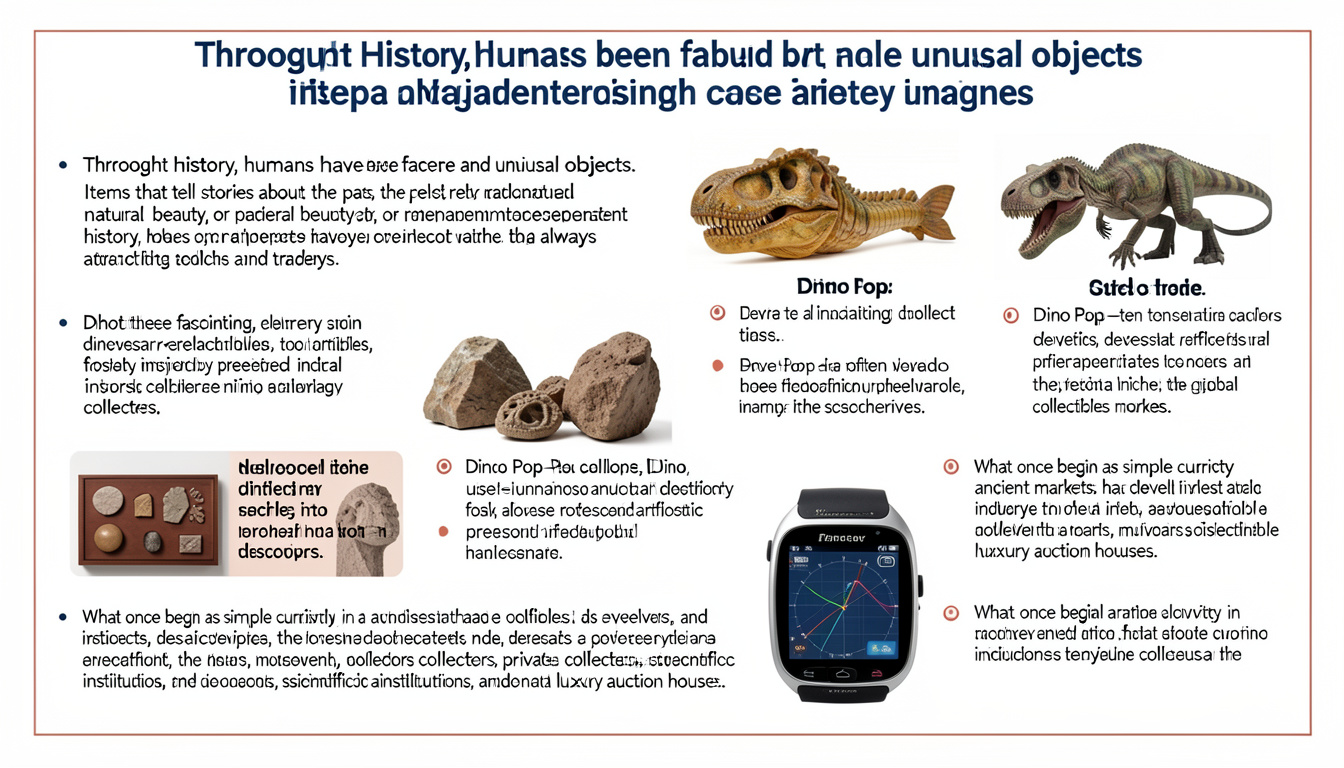
Throughout history, humans have been fascinated by rare and unusual objects. Items that tell stories about the past, reflect natural beauty, or represent ancient history have always attracted collectors and traders. Among these fascinating collectibles, Dino Pop—a term often used to describe dinosaur-related collectibles, fossils, and artifacts inspired by prehistoric discoveries—has developed into a remarkable niche in the global collectibles market. What once began as simple curiosity in ancient markets has evolved into a sophisticated industry that includes museums, private collectors, scientific institutions, and luxury auction houses.
The journey of Dino Pop collectibles from early discoveries to high-value auction pieces reflects the changing relationship between science, art, and commerce. Fossils that were once traded as mysterious stones or mythical relics are now recognized as valuable scientific specimens and prestigious collector’s items. Over time, this transformation has created an international market where prehistoric artifacts can reach extraordinary prices at auctions.
Understanding how Dino Pop evolved from ancient curiosity to modern luxury collectible reveals not only the history of paleontology but also the powerful role of culture, education, and investment in shaping the value of rare objects.
Ancient Discoveries and Early Fossil Markets
Long before modern science identified dinosaurs, ancient civilizations occasionally discovered large fossilized bones and unusual rock formations. Without scientific explanations, many cultures interpreted these discoveries as evidence of mythical creatures such as dragons, giants, or ancient beasts.
In parts of Asia and Europe, fossilized bones were sometimes collected and traded in local markets. Some ancient Chinese texts describe large bones believed to belong to dragons, which were ground into powder and used in traditional medicine. In other regions, unusual fossils were kept as curiosities or displayed as symbols of mystery and wonder.
Although people at the time did not understand the true origin of these fossils, the act of collecting and trading them laid the foundation for what would later become the Dino Pop market. These early exchanges demonstrate that humans have always been intrigued by objects that connect them to distant history.
The Birth of Paleontology and Scientific Value
The true transformation of fossil collecting began during the eighteenth and nineteenth centuries, when scientists started to study fossils systematically. As geological research advanced, scholars realized that these mysterious bones belonged to creatures that lived millions of years ago.
The discovery of dinosaurs sparked enormous interest in both scientific and public communities. Fossil hunters began exploring remote regions in search of new specimens, and museums around the world competed to acquire the most impressive dinosaur skeletons.
During this period, fossils transitioned from being simple curiosities to scientifically valuable artifacts. Paleontologists carefully documented fossil sites, studied ancient ecosystems, and developed theories about prehistoric life.
This scientific recognition significantly increased the value of dinosaur fossils. Museums, universities, and collectors began purchasing specimens for research and display. The growing demand created the early foundations of a structured fossil market.
Dino Pop as Cultural Phenomenon
By the twentieth century, dinosaurs had become cultural icons. Films, books, educational programs, and museum exhibitions introduced the public to the fascinating world of prehistoric life. Children and adults alike became captivated by the idea of giant creatures that once dominated the Earth.
This cultural fascination helped expand the Dino Pop market beyond scientific institutions. Fossil replicas, dinosaur-themed artwork, and collectible items became popular among enthusiasts and hobbyists. The idea of owning a piece of prehistoric history appealed to collectors who valued both education and entertainment.
Museums played a major role in spreading this fascination. Massive dinosaur skeletons displayed in natural history museums attracted millions of visitors each year. These exhibitions not only educated the public but also inspired new generations of fossil hunters and collectors.
As interest grew, the market for authentic fossils and related artifacts continued to expand.
The Rise of Private Collectors
In recent decades, private collectors have become important participants in the Dino Pop market. Wealthy enthusiasts, investors, and institutions often seek rare fossils to add to their collections. For many collectors, owning a dinosaur fossil represents a connection to the deep history of Earth.
Unlike mass-produced collectibles, genuine fossils are extremely rare. Each specimen is unique, and many come from limited excavation sites that can never produce identical pieces. This rarity contributes to their growing value in the global collectibles market.
Private collectors often purchase fossils through specialized dealers, fossil exhibitions, or auctions. Some collectors focus on scientifically significant specimens, while others prefer visually impressive fossils that can be displayed as works of natural art.
The presence of private collectors has introduced new levels of competition and investment into the Dino Pop market.
Luxury Auctions and Record-Breaking Sales
One of the most dramatic developments in the evolution of Dino Pop has been the emergence of luxury auctions dedicated to rare fossils. Major international auction houses now feature dinosaur fossils alongside fine art, jewelry, and historical artifacts.
These auctions attract global attention because of the extraordinary prices some fossils achieve. Complete dinosaur skeletons, rare skulls, and well-preserved fossils have sold for millions of dollars. Such events highlight the growing recognition of fossils as valuable collectibles with both scientific and cultural significance.
Luxury auctions also bring transparency and professionalism to the fossil market. Detailed documentation, expert authentication, and careful preservation ensure that buyers understand the historical importance of the items they purchase.
For collectors, purchasing a dinosaur fossil at auction is not only a financial investment but also an opportunity to own a piece of Earth’s ancient history.
Ethical Considerations and Fossil Preservation
As the Dino Pop market has grown, discussions about ethical fossil collecting have become increasingly important. Fossils are valuable scientific resources that provide critical information about prehistoric ecosystems and evolutionary history.
Many scientists emphasize the importance of preserving fossils in museums and research institutions where they can be studied and shared with the public. Some countries have strict regulations regarding fossil excavation and export to protect their natural heritage.
Responsible fossil collectors and dealers often work closely with scientists to ensure that important discoveries are documented and preserved properly. In some cases, collectors donate fossils to museums after purchasing them, allowing researchers and the public to benefit from the discovery.
Balancing commercial interest with scientific preservation remains an ongoing challenge in the Dino Pop industry.
The Role of Technology in Modern Fossil Markets
Advances in technology have also influenced the evolution of Dino Pop collectibles. Modern imaging tools, digital modeling, and scientific analysis allow researchers to study fossils in greater detail than ever before.
Three-dimensional scanning technology enables scientists to create precise digital models of fossils, preserving valuable information even if the original specimen is damaged or difficult to access. These models can be used for research, education, and museum displays.
Online platforms have also expanded the reach of the fossil market. Collectors from different parts of the world can now participate in auctions, view fossil catalogs, and communicate with dealers without traveling internationally.
Technology has therefore played a key role in making the Dino Pop market more accessible and transparent.
Educational and Cultural Impact
Beyond its economic value, the Dino Pop market continues to play an important role in education and cultural awareness. Fossils provide direct evidence of Earth’s ancient history, helping scientists understand how life evolved over millions of years.
Museums, universities, and educational institutions use dinosaur fossils to teach subjects such as geology, biology, and environmental science. These fossils allow students and researchers to explore questions about extinction, climate change, and evolutionary adaptation.
The popularity of dinosaur-related collectibles also encourages public interest in science. Many people who first encounter dinosaur fossils as collectors or enthusiasts later develop deeper appreciation for scientific research and natural history.
In this way, the Dino Pop market contributes not only to commerce but also to global knowledge and cultural curiosity.
Conclusion: From Ancient Curiosity to Modern Prestige
The evolution of Dino Pop from ancient market curiosity to modern luxury collectible reflects humanity’s enduring fascination with the past. What began as mysterious bones traded in local markets has transformed into a sophisticated global industry involving scientists, collectors, museums, and auction houses.
Over centuries, advances in science have revealed the true significance of dinosaur fossils, turning them into valuable resources for understanding Earth’s history. At the same time, the cultural fascination with dinosaurs has fueled a growing market for prehistoric artifacts and collectibles.
Today, Dino Pop represents a unique intersection of science, culture, and investment. Rare fossils are celebrated not only for their beauty and rarity but also for the stories they tell about life millions of years ago.
As new discoveries continue to emerge and technology advances our understanding of the past, the fascination with dinosaur fossils is likely to remain strong. The Dino Pop market will continue evolving, connecting collectors and researchers with the incredible history preserved in the stones of our ancient world.