Swivel connectors are rotating hardware components used in material handling to prevent wire rope twist and allow loads to spin freely during lifting operations. They’re essential when suspended items need repositioning mid-lift or when dealing with loads that naturally rotate.
And that’s where RUD Chains helps you produce patented lifting hardware built to handle rotating load scenarios. So when loads start to spin (most do), the right connector keeps the lift controlled and protects your equipment as well as your workers.
This guide covers the materials, types, and selection factors of swivel connectors, which are required when choosing swivel connectors. You’ll also learn what works in real Australian conditions, including the maintenance habits that keep these products functioning reliably.
Materials Used in Swivel Connectors
Swivel connectors are typically made from steel alloys, stainless steel, or aluminium, depending on load requirements and environmental conditions.
You might be wondering why material choice is so important when they all look similar on paper. Well, it’s because each material handles load, weather, chemicals, and repeated use very differently.
Let’s look at how each material performs in different conditions.
Steel Alloys for Heavy-Duty Work
Heat-treated alloy steel dominates mining and infrastructure projects where brutal loads are standard operating procedure every day. We’ve seen these perform well consistently across Brisbane and Ipswich operations, where the equipment takes a beating.
If you want something cheaper, carbon steel variants are good for general industrial rigging that doesn’t face constant corrosive exposure. With this, the working load limits stay reliable as long as you’re not dealing with chemical splashes or marine environments.
High-tensile grades resist deformation even after thousands of heavy lifting cycles. So, think of them as the workhorses for repetitive heavy lifts where failure isn’t an option.
Stainless Steel in Corrosive Environments
Coastal facilities around the Port of Brisbane choose marine-grade stainless to combat salt spray and humidity damage. Frankly, the upfront cost of these steels feels high compared to carbon steel alternatives.
For food processing and pharmaceutical operations, you need non-contaminating hardware that maintains hygiene standards throughout production runs. That’s where stainless steel won’t rust in products or require constant repainting to stay functional.
Bottom line: The extended service life of stainless steel justifies the premium price tag when other material replacements would disrupt operations. For instance, one stainless connector lasting ten years beats replacing three carbon steel units over the same period.
Aluminium for Lighter Applications
Entertainment rigging favours aluminium’s portability when your crew needs to set up and pack down quickly. You’ll notice the difference straight away, because that lighter weight helps everyone handle dozens of connection points without wearing out.
And when you’re working overhead, that weight reduction helps even more. Lighter hardware eases the load on support beams while still giving you the rated strength you need for safe installations.
That’s how every kilogram you remove from suspended rigging reduces pressure on the structure above your team.
Types of Swivel Connectors in Material Handling
The best part about knowing swivel connector types is that you can match the exact hardware to your rigging challenge without overspending. Plus, connector design varies based on attachment methods, rotation requirements, and the specific load characteristics you’re dealing with.
Here’s the breakdown of the three main types of swivel connectors.
Swivel Hoist Rings with Lifting Points
These types of connectors pivot and rotate to align with whatever direction the load pulls during angled lifts. For instance, its 360-degree rotation means your lifting points stay properly aligned, no matter how the load shifts position.
Forged construction includes stamped capacityratings so operators know exactly what your hardware can handle safely. Some operators assume that the ratings are suggestions, but they’re actually the maximum working load limits tested under controlled conditions.
You can also bolt them directly to machinery or structural steel for secure attachment points that adjust as loads shift. When the threaded bolt passes through your equipment and locks down with a nut, it creates a permanent lifting point that handles multi-directional pulls.
Jaw and Eye Swivel Connectors
Basically, the fixed jaw end provides stable mounting while the swivelling eye accepts hooks or shackles for flexible arrangements. To be more specific, the jaw clamps onto fixed structures or beams, and the eye end rotates independently.
Rotation happens here freely without the torque transferring back through your entire rigging system. That’s why, when the load spins, only the eye rotates while the jaw stays locked in position.
Crane work benefits most when loads need spinning during transport or precise angular positioning at the destination. In this situation, precast concrete panels and steel beams get positioned exactly where they need to go without fighting the rigging.
Swivel Shackles for Wire Rope Systems
If you look at traditional shackle designs, you’ll see how modern versions now include bearing functionality so rotation stays smooth under working loads.
What surprises most people is that the pin still runs through the shackle body like a standard setup, but the whole assembly can rotate when it needs to. And that rotation protects your wire rope from kinking and internal strand damage that comes from connections binding up.
This design is also used a lot in container handling and precast concrete work, because those loads naturally want to turn. Here, the swivel shackle gives room to the wire rope to follow that rotation instead of twisting itself into scrap.
Choosing the Right Swivel Connector: What You Need to Know
Before selecting a swivel connector, you need to know the working load limit, pull direction, bearing quality, thread specifications, and environmental factors.
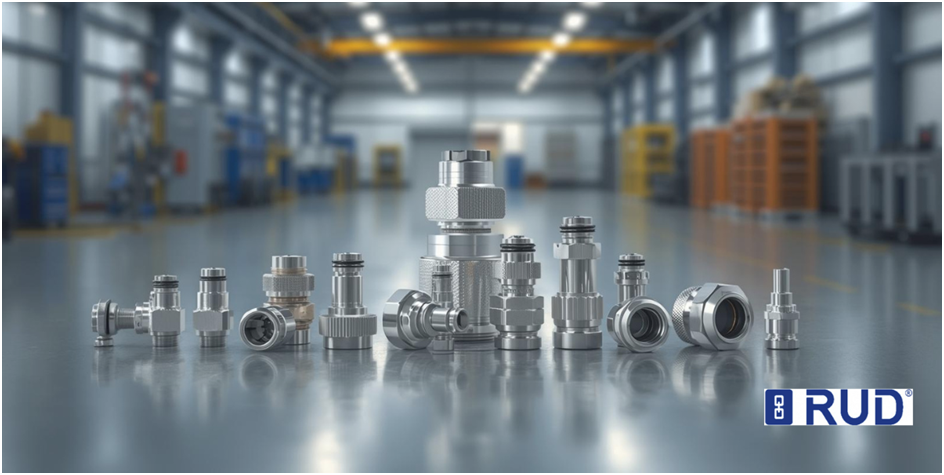
Now, let’s have a look at those points in detail.
- Working Load Limits: Swivel connectors need to exceed your heaviest anticipated load with proper safety margins built in. For instance, a 2-tonne load requires at least a 4-tonne-rated connector when factoring in dynamic forces.
- Pull Direction and Bearing Quality: We’ve seen certain connector designs handle side-loading better than straight vertical applications. And here, bearing quality determines how smoothly rotation happens and how many years the connector maintains function before replacement.
- Thread Specifications and Bolt Sizes: Check the swivel connectors against your existing equipment before ordering. Because metric threads won’t fit imperial holes, and mismatches cause installation delays.
- Australian Standards Compliance: According to Australian Standards, connector materials must perform reliably under temperature swings, chemical exposure, and coastal conditions to meet inspection and audit requirements.
Pro tip: Review products based on total cost of ownership rather than upfront price. Because a quality swivel connector lasting five years beats replacing cheap units annually.
Maintenance Tips That Keep Swivel Connectors Working
Now that you understand selection criteria, proper maintenance keeps those connectors performing reliably for years ahead. We’ve seen bearing failures on worksites where maintenance schedules got ignored.
So, here are the elements that keep them working:
- Monthly Rotation Checks: It confirms smooth movement without grinding or clicking sounds. And if you hear any sign of resistance here, it means the bearing needs attention immediately.
- Grease Application: Apply manufacturer-approved lubricants to bearing surfaces, particularly after dusty conditions or moisture exposure.
- Visual Inspection: This inspection catches problems early, including cracks, bent components, or worn threads. So, don’t forget to check the bolt threads and connection points for any sign of deformation to prevent an accident.
- Immediate Replacement: It becomes necessary when damage appears or bearing rotation feels stiff. Caution! Never try nursing a damaged connector through one more job.
Bottom line: A swivel connector that rotates smoothly today but gets no maintenance will bind up within months. In this case, regular inspection and lubrication cost far less than equipment damage or workplace injuries.
Get Your Swivel Connectors Sorted Right
Proper connector selection protects your rigging equipment and creates safer material handling operations for your crew. Plus, aligning hardware specifications with actual load demands, rotation needs, and site conditions delivers you a reliable performance across lifting points.
Always follow routine inspection and scheduled maintenance to extend the service life of your swivel connectors.
Need swivel connectors built for Australian conditions? RUD Chains manufactures lifting points and swivel hardware designed for heavy industrial use. Contact them and request specifications for your specific application today.